
Spore: A Symphony of Levels of Scale
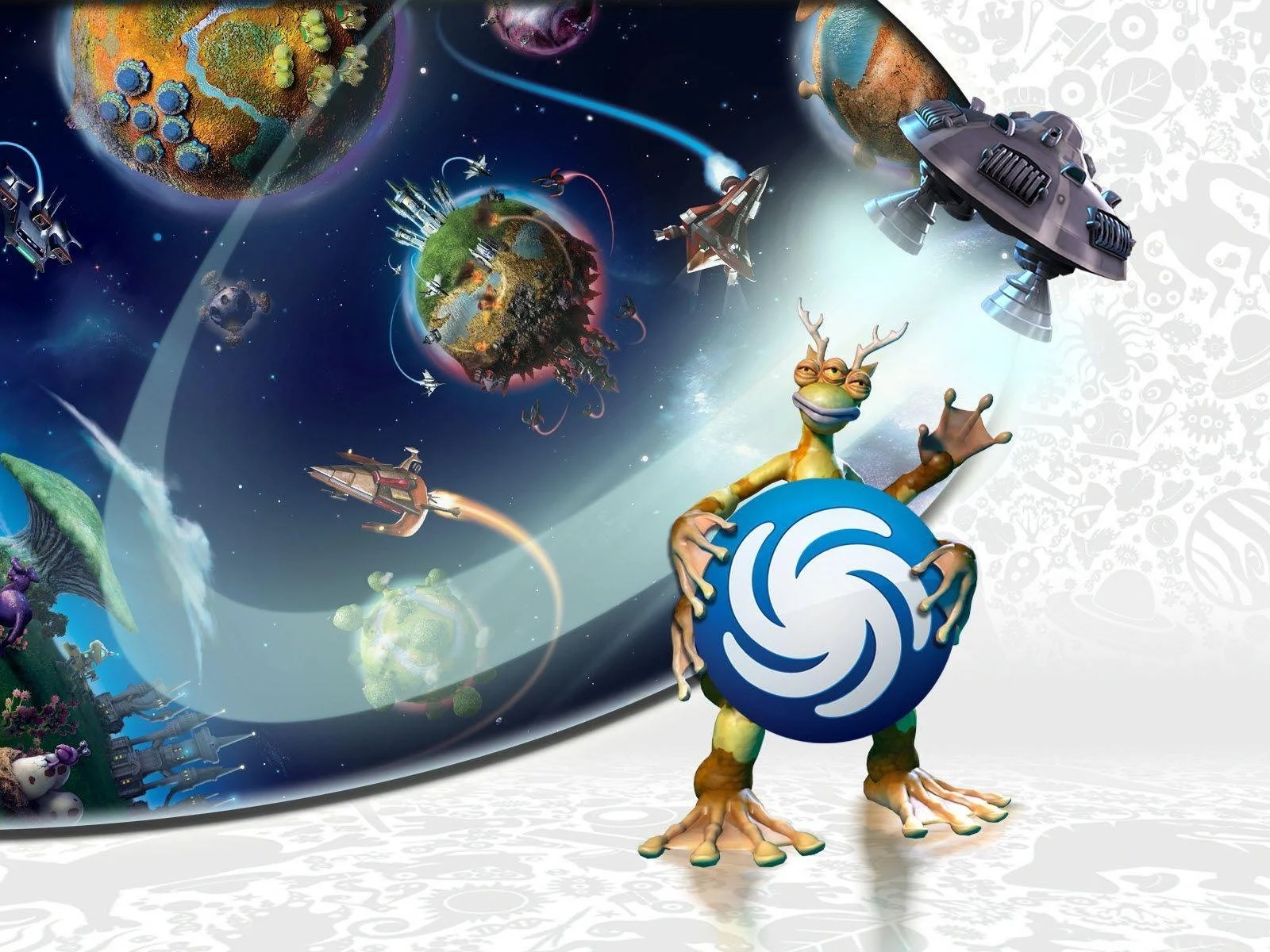
In Jesse Schell’s GDC talk: “The Nature of Order in Game Design”, he says: “The game Spore was a SYMPHONY of levels of scale.” What did he mean? To answer, let’s contextualize observations through Christopher Alexander’s own theories of living patterns, which Jesse is referencing.
Spore features 5 stages
Cell
Creature
Tribal
Civilization
Space
Galactic Adventures (Expansion)
Each stage is larger than the last. Beyond conceptual size, each stage functionally expands its degrees of overlapping centers. Starting as a cell, there are only three centers: you, food, and predators. The cell stage focuses on fast-paced, moment-to-moment gameplay, coincidentally referred to as a “mini-game.” Fast-forward to the civilization stage, players re-center their gameplay around classic RTS “Macro” play. See the pattern here? You still have small characters performing small actions, but at larger stages it’s the big decisions that count. As the world grows, so do its interactions.
Why does any of this matter???
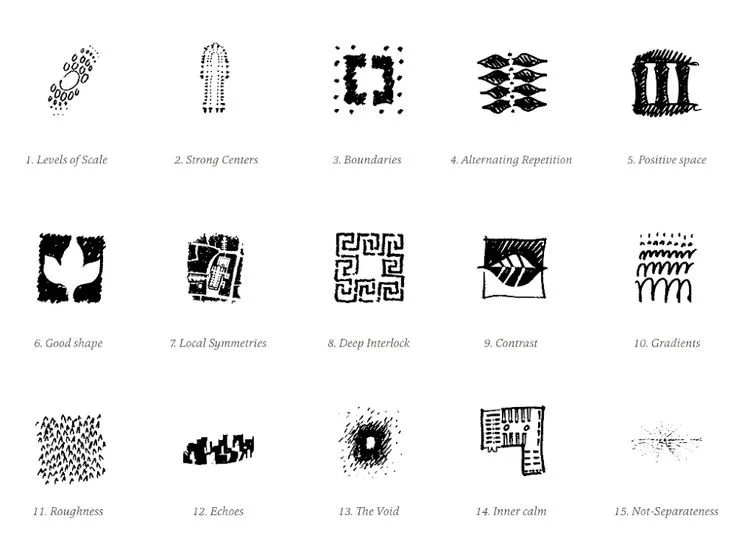
Figure 1. “Fifteen Fundamental Properties” from Christopher Alexander, The Nature of Order, Book 1: The Phenomenon of Life (Center for Environmental Structure, 2002)
© Christopher Alexander / CES
Christopher Alexander formulated 15 patterns which he suggests are fundamental to any living structure. Let’s continue analyzing his first pattern “Levels of Scale” within the context of Alexander’s other patterns.
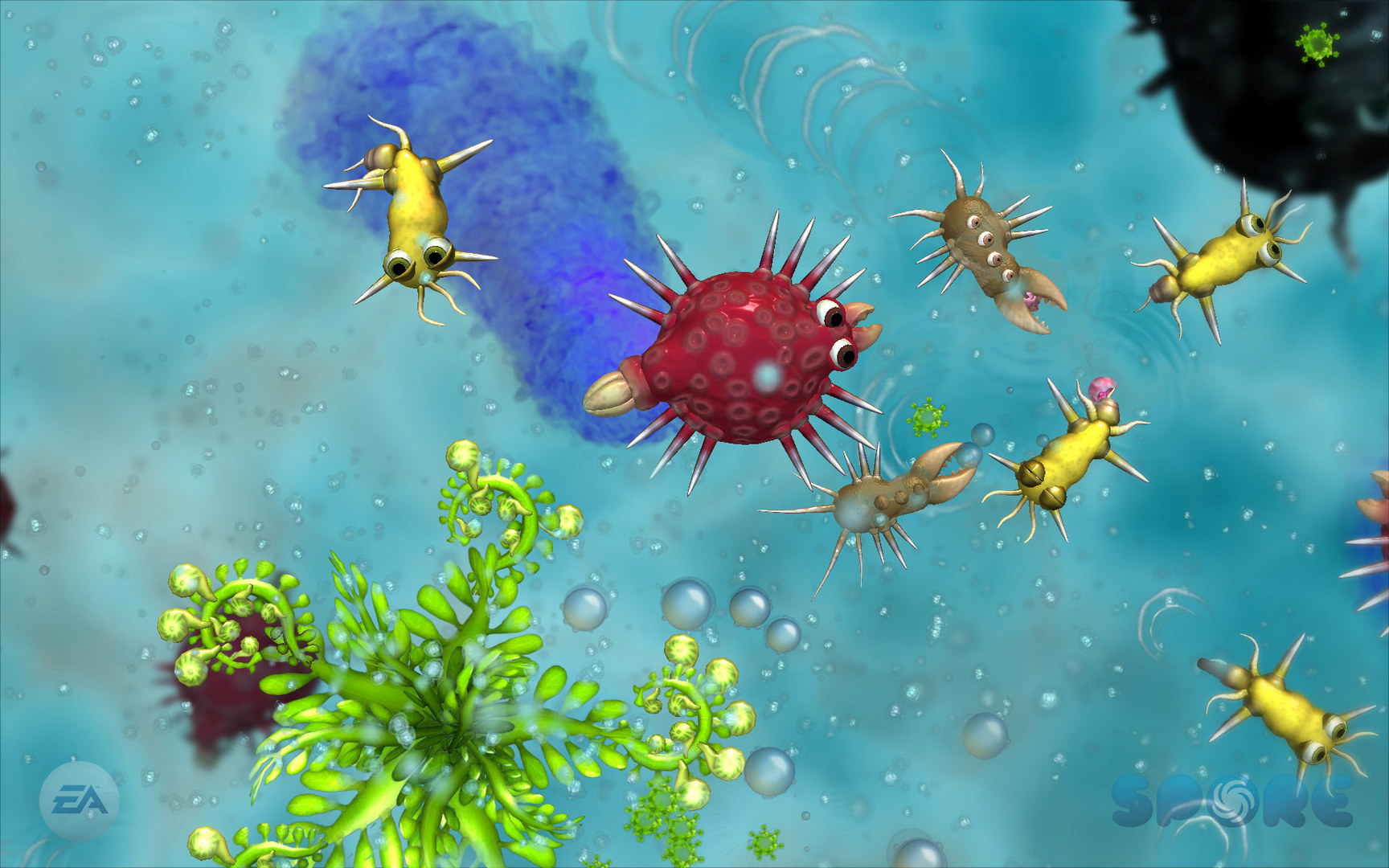
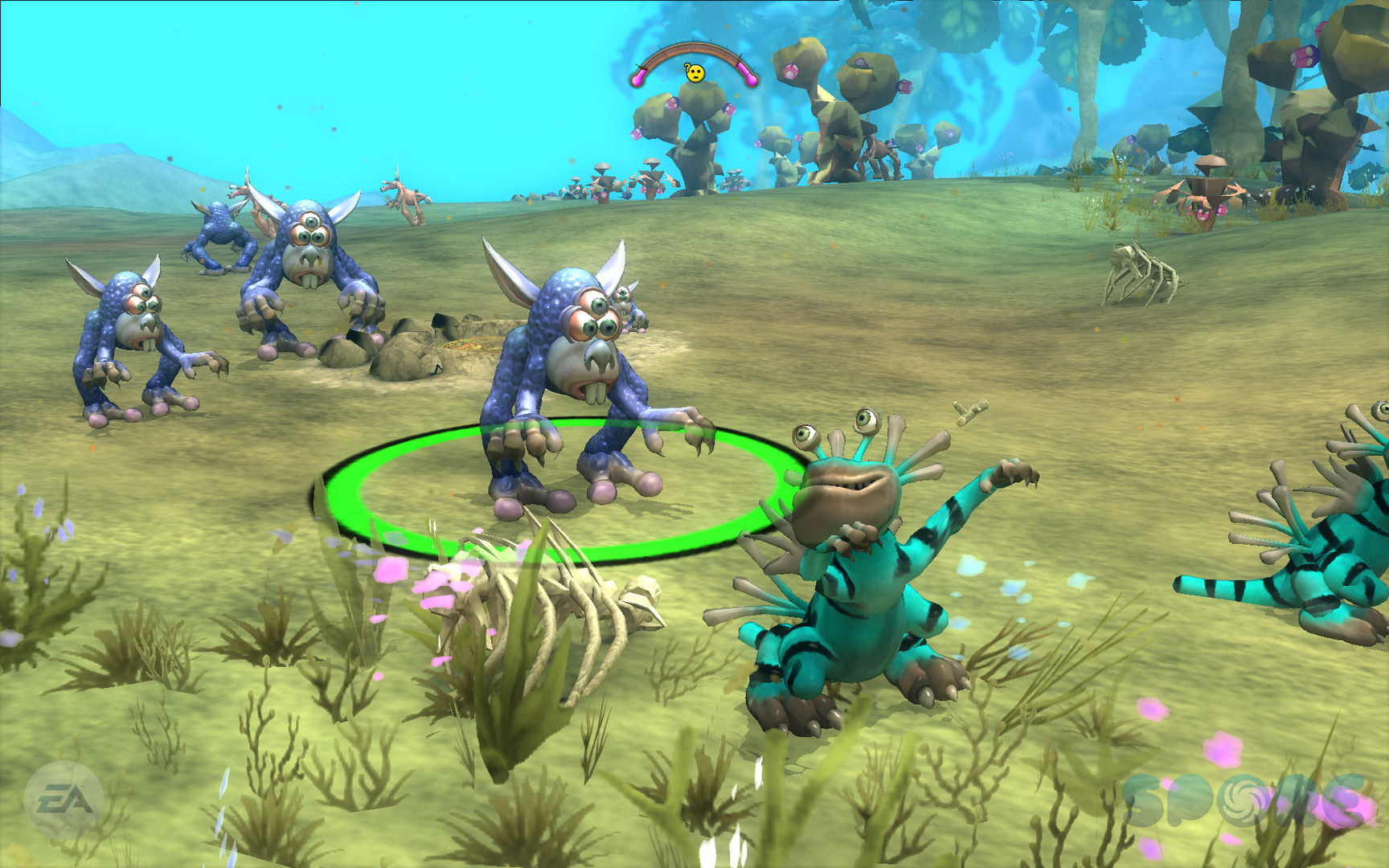
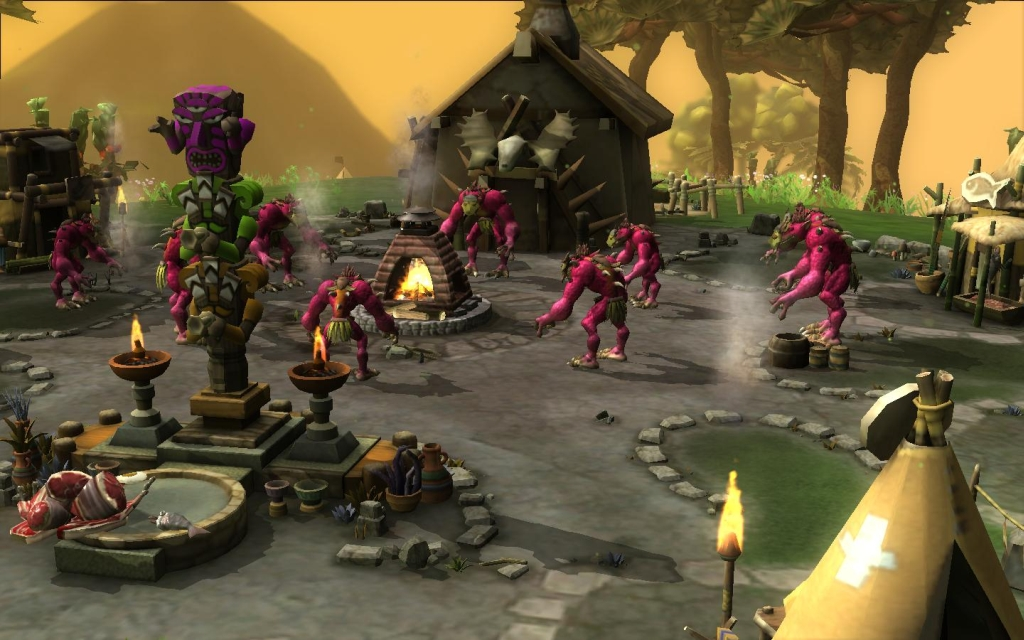
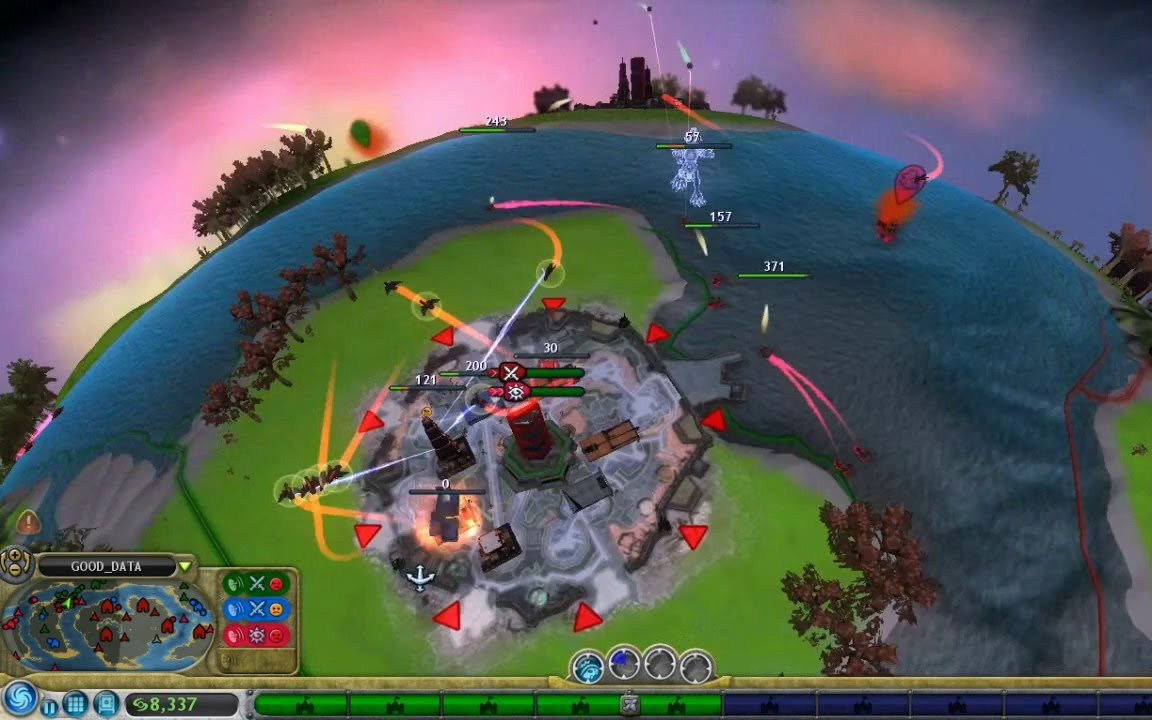
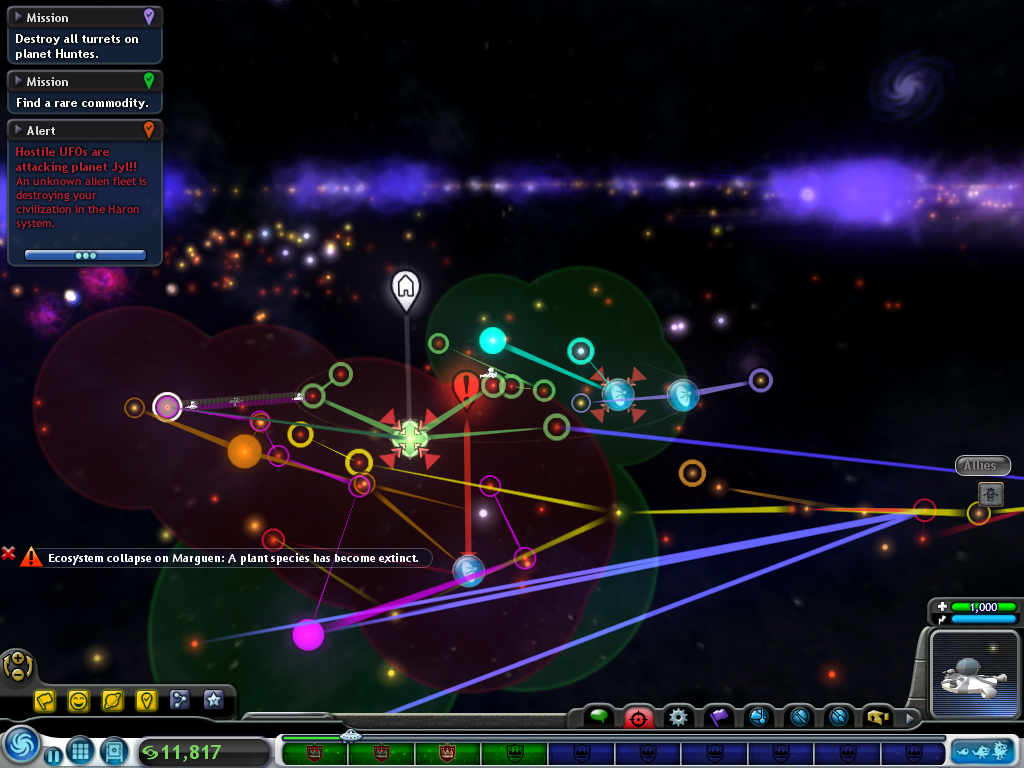
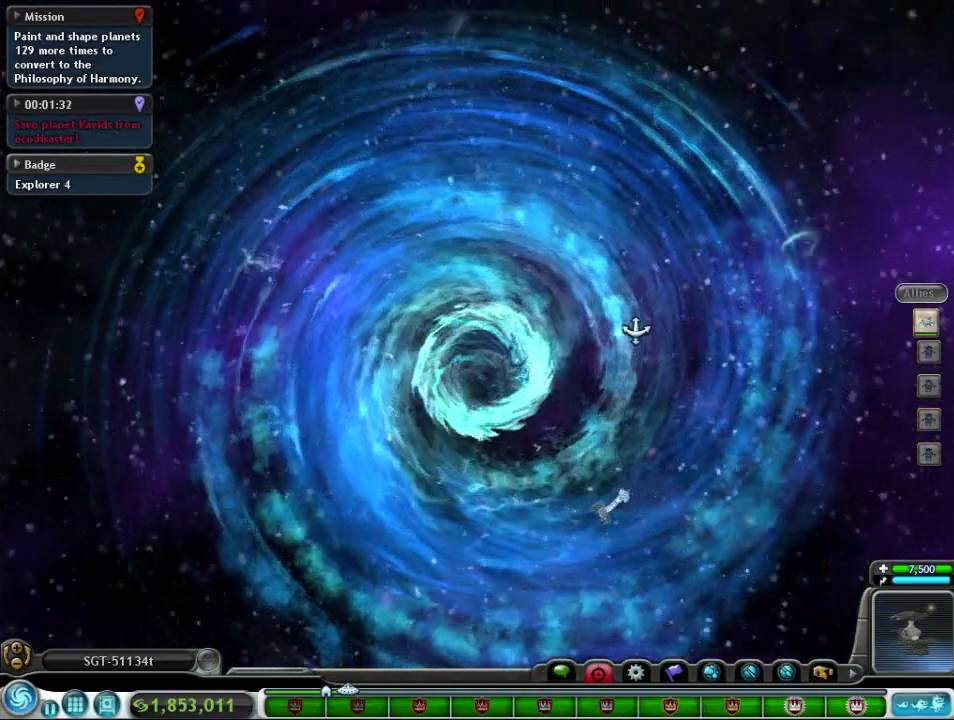
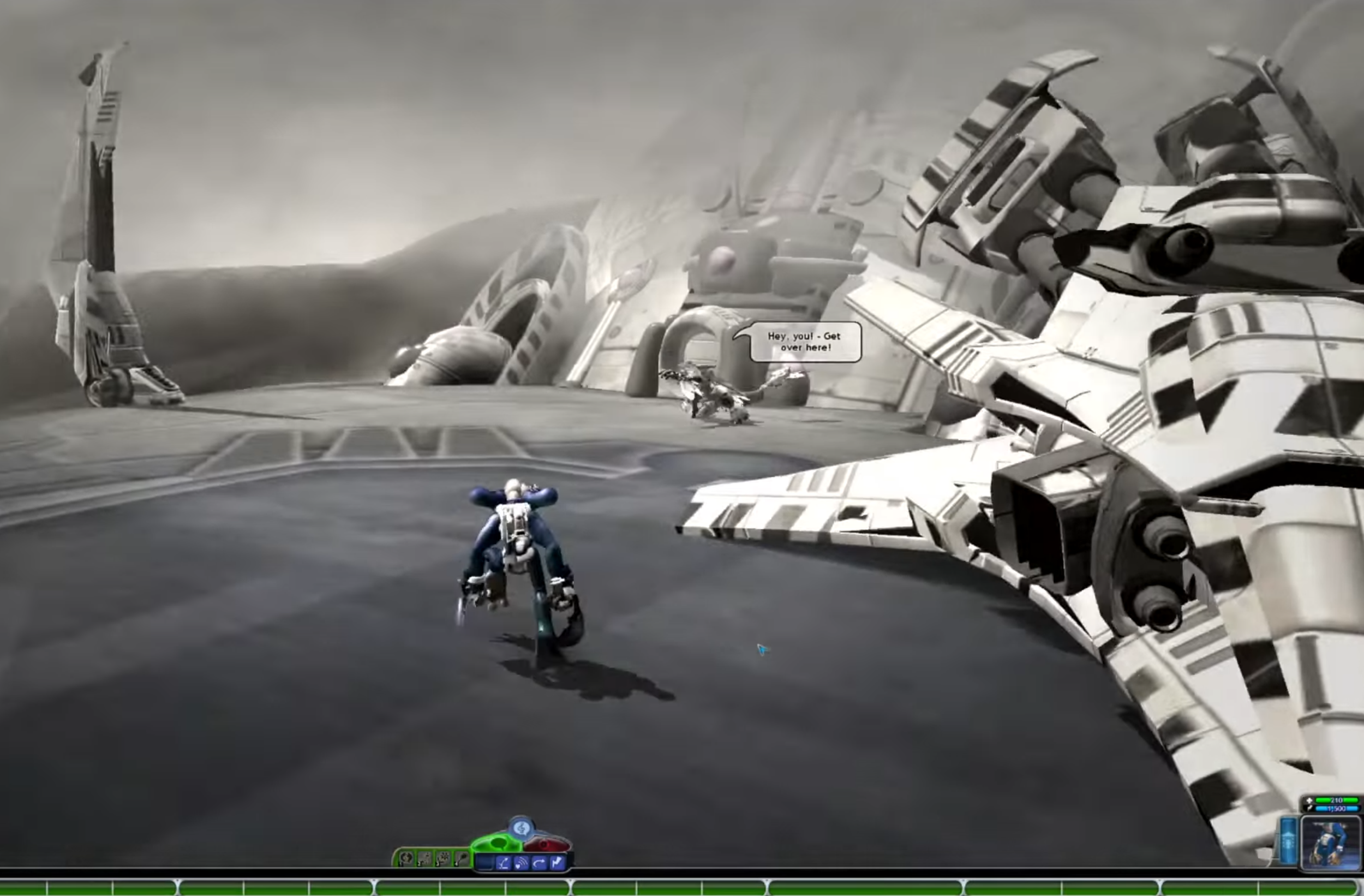
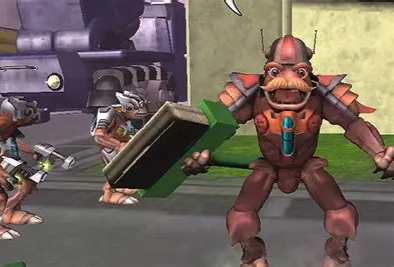
Scale changes dramatically between stages, and with it, more and more overlapping centers unfold through a process of subtle differentiation. Observe each of these images (which are arranged chronologically). Take note of each strong-center that appears.
Starting from the cell stage, our own character is the focal point, but the vegetation alone is expressed as multiple strong centers that branch out at various scales in a fractal pattern. The largest center is marked on each side by looping tendrils which then form their own circular boundary of food, which is both the smallest and most important center. For the creature stage, the centers that matter most are our characters, our nests, and the eggs that they produce in concert. Notice the slight curvature of the horizon which contrasts against the sky, further alluding to the fact that our nest exists on one much larger center: the planet. At the tribal stage, notice the centers (marked by boundaries) that emerge within the tribe; each center begins to unfold on itself. Fire pits, nesting pits, huts, food pits, and more creatures marking a center, but our sense of scale has grown once again. Through graded variation and alternation repetition, our scale sores through solar systems, and then to galaxies. Individual interactions are on the scale of planets, and the effects on individual organisms have become an observable microcosm of our actions… a means to an end.
Finally, we find ourselves again centered on single characters, bringing the symphony to a crescendo: we explore infinite varieties of player-made worlds on foot. The small and the gigantic merge into one. That is the story told by these images, and it’s the dramatic play that occurs as the story emerges that the player will hold onto as beloved memories. That’s why I played through Spore several times before the crescendo of an expansion was brought to the product, and why I remember it fondly to this day.
Certain images in this article are reproduced under fair use for the purpose of critical commentary and analysis.
Works Cited
Alexander, Christopher. The Nature of Order, Book 1: The Phenomenon of Life.
Berkeley, CA: Center for Environmental Structure, 2002.
(Reproduced figure under fair use for purposes of commentary.)
Schell, Jesse. The Nature of Order in Game Narrative. YouTube, uploaded by Game Developers Conference, 2018, https://www.youtube.com/watch?v=E-qnXNUSUMA. (Accessed 02/10/2026)
